Nursery Closet Organization and Decor Ideas bring calm, pretty order to tiny wardrobes and sweet storage nooks. These nursery closet organization and decor ideas mix soft textiles, gentle pastels, natural wood, and rattan for a look that feels cozy and breezy at the same time.
Designed for nurseries, small bedrooms, and shared family spaces, these ideas work well for morning outfit choices, quick diaper changes, and toy rotation. Use them to create a soothing, tidy corner that suits sleepy mornings, playful afternoons, and a relaxed, welcoming entry to baby’s space.
Open Shelves With Woven Basket Storage

Open shelving painted in warm white or soft gray paired with woven rattan and seagrass baskets makes a nursery closet feel airy and lived-in. Smooth painted wood shelves, linen-lined baskets, and a palette of blush, sage, and cream keep the space light while textures like cotton muslin and knit blankets add depth. Use natural brass hooks for hats and a slim wooden rail for hanging rompers. The overall vibe is calm and tactile, perfect for a nursery that needs both pretty display and quick, grab-and-go storage.
Styling Tips
- Group baskets by item type and keep daily outfits front and center.
- Fold blankets flat to show soft textures and keep a neutral color mix.
- Add small wooden labels tied with twine for a tidy look.
Low Rod For Outfit Rotation And Display

Installing a low hanging rod brings baby outfits into view and simplifies morning picks. Choose a brushed brass or matte black rod paired with thin wooden hangers and a backdrop of soft cream paint. Textiles like cotton onesies, tiny knit cardigans, and modal rompers create a gentle color story in neutrals and pastels. Add a slim shelf above for folded muslin swaddles and a row of small labeled bins below for socks and bibs. This arrangement feels editorial yet practical, ideal for parents who want clothes to be part of the room’s decor.
Styling Tips
- Hang outfits by set so outfits are ready to wear.
- Rotate seasonal pieces to the back and keep everyday items forward.
- Use matching hangers for a clean, boutique look.
Hanging Closet Dividers For Easy Sorting

Soft fabric hanging dividers labeled by size or season make sorting tiny clothing effortless and visually satisfying. Choose breathable cotton or linen dividers in muted tones—soft gray, powder blue, or warm beige—paired with a painted plywood shelf and woven baskets. Combine textures like chunky knit blankets and cotton rompers to add contrast. Dividers keep newborn, 0–3, 3–6 month categories tidy and prevent rummaging. This approach keeps the closet neat while turning organization into part of the nursery’s soft, layered look.
Styling Tips
- Color-code dividers for quick outfit selection.
- Add a ribbon loop for easy grabbing.
- Keep one divider blank for overflow or gifts.
Stackable Fabric Drawers For Soft Storage

Stackable fabric drawers in neutral tones offer cushiony, modular storage for socks, bibs, and tiny accessories. Think cotton canvas or breathable mesh with leather pull tabs stacked on a low shelf made from light oak. The palette of soft cream, dusty rose, and warm taupe keeps things gentle and modern. Textures like plush towels and muslin wraps peek from open drawers for a cozy feel. This solution is flexible: pull one drawer forward for laundry day, or group drawers by category for visual order and easy access.
Styling Tips
- Label each drawer on the front with a subtle tag.
- Reserve one drawer for frequently used changing supplies.
- Keep colors consistent to maintain calm visual flow.
Pegboard Wall For Hats And Accessories

A painted pegboard inside the closet door or along a back wall provides playful, changeable storage for hats, headbands, and small toys. Use wooden pegs, baskets, and little shelves that you can rearrange as needs change. Keep the board in a soft pastel hue like sage or pale peach to coordinate with a cotton rug and knit blankets stored below. The mix of smooth painted plywood, woven textures, and fabric accessories creates a lively tactile display that’s both decorative and practical for quick outfit finishing touches.
Styling Tips
- Group accessories by type and rotate frequently used items forward.
- Add a small mirror or hook for a pacifier clip.
- Paint the pegboard to match or subtly contrast closet trim.
Shoe Cubbies Sized For Tiny Feet

Low cubbies designed for baby shoes and booties keep pairs paired and add a decorative element at the base of the closet. Use pale wood cubby units with soft gray backing and line each slot with fleece or cotton for a plush touch. A palette of soft navy, blush, and cream keeps things lively yet cohesive. Tiny felt baskets within cubbies can hold socks and mittens while open fronts allow easy grabbing. This tidy base layer completes a nursery closet’s look and makes getting dressed a little more charming.
Styling Tips
- Store shoes by size, front to back, for quick access.
- Add a small label or icon on each cubby for visual cues.
- Keep one open cubby for an extra pair for emergencies.
Neutral Palette With Warm Wood Accents

A neutral closet palette centered on cream, oatmeal, and warm wood tones offers a calming backdrop that highlights texture over color. Use birch or oak shelving, linen drawer bins, and cotton hangers for a minimalist, cozy feeling. Layer in knits, cashmere-feel baby blankets, and breathable muslin for tactile contrast. Add a pop of subtle color with a single blush basket or sage mobile to keep the palette soft. This approach is ideal for a restful nursery where the closet blends into the room rather than shouting for attention.
Styling Tips
- Stick to three main materials: wood, linen, and cotton.
- Introduce one muted accent color through a small textile or toy.
- Keep labels understated—kraft tags or simple stamps work well.
Boho Rattan Hooks And Textured Bins

Boho touches like rattan hooks, macramé hangers, and textured seagrass bins give a nursery closet a relaxed, layered feel. Pair these with a mix of woven cotton and chunky knit throws in terracotta, cream, and muted teal for an earthy, playful palette. Natural wood shelving and rope details add warmth while soft muslin bodysuits keep the look light. This styling brings personality to storage while making it easy to reach everyday items and tuck away seasonal extras in prettily textured containers.
Styling Tips
- Use rattan hooks for lightweight hats and small bags.
- Keep bulkier items in closed bins to avoid visual clutter.
- Mix textures—macramé, knit, and seagrass—for a layered effect.
Built In Changing Nook With Shelving Above

A built-in changing nook inside or beside the closet maximizes space and keeps diapers, creams, and outfits within arm’s reach. Choose a cushioned changing pad in a neutral cotton cover, a narrow shelf above for folded muslin, and a set of shallow drawers for wipes and creams. Finish with a calm palette—stone, pale blue, and cream—and accents like matte ceramic jars and a small framed print. The integrated look feels clean and considered, turning the closet into a multitasking station that matches the nursery decor.
Styling Tips
- Keep essentials in one shallow drawer for speed during changes.
- Use washable covers and stack a few spare pads nearby.
- Add a soft nightlight for late-night changes.
Seasonal Rotation Bins With Clear Labels

Clear-front or labeled bins for seasonal rotation keep the closet uncluttered and make swapping wardrobes simple. Use acrylic-front boxes or canvas bins with a transparent window and label them in a minimalist font. Combine with lightweight shelving and soft cotton piles in spring pastels or chunky wool knits for winter months. This method gives a curated, tidy appearance while protecting off-season pieces. The mix of smooth acrylic, soft fabrics, and gentle color shifts creates a neat, intentional look that keeps the nursery calm and organized.
Styling Tips
- Store off-season clothes higher up and everyday pieces at eye level.
- Label bins by month or size for faster swaps.
- Use color-consistent labels to keep the visual calm.
Display Shelf For Books And Favorite Toys

A shallow display shelf inside the closet highlights bedtime books and a few cherished toys, adding personality without clutter. Use a painted ledge shelf in soft cream or muted blue and arrange board books face-out with a couple of plush toys and a small ceramic nightlight. Textures like corduroy and knit soften the display, while a palette of soft primary hues keeps it playful. This small staging spot doubles as decor and a functional drawer-free zone for items you want visible and within reach for storytime routines.
Styling Tips
- Rotate books seasonally to keep the shelf fresh.
- Limit items to three to five to avoid overcrowding.
- Mix heights—books, a toy, and a little framed print—for balance.
Fabric Drawer Inserts For Snug Organization

Fabric drawer inserts tailored to fit your closet drawers create compartmentalized homes for mittens, bibs, and tiny socks. Choose breathable cotton or canvas inserts in oatmeal, soft gray, or muted pink to coordinate with folded knits and cotton onesies nearby. Soft textures like fleece liners and muslin dividers keep delicate items safe and add a cozy tactile quality. The look is neat and calm, with each small item having a designated place so mornings move faster and drawers look curated even when full.
Styling Tips
- Designate each insert for one item type—socks, bibs, hats.
- Fold items vertically for maximum visibility.
- Use neutral tones to maintain a tranquil drawer interior.
Vertical Hanging Shelves To Save Floor

Vertical hanging shelves made from canvas or lightweight plywood free up floor space and create pockets for folded sweaters, diapers, and plush toys. Choose a muted palette like dove gray, pale mint, and cream, and pair the shelves with a slim hanging rod and wooden hangers. Soft cotton and knit textures contrast against the structured shelves, giving depth without bulk. This vertical approach works well in narrow closets and keeps essentials easily reachable while maintaining a tidy, layered aesthetic that complements a modern nursery.
Styling Tips
- Place frequently used items on the middle shelves for easy reach.
- Use small baskets on the top shelf for tiny accessories.
- Secure shelves with sturdy hooks to avoid sagging.
Color Coded Clothing System By Size

A color coded system uses subtle fabric tags, shelf bands, or small bins to represent sizes and keeps sorting fast and visual. Choose a soft palette—sage for newborn, blush for 3–6 months, cool gray for older sizes—and pair with light pine shelving and cotton hangers. Textures like ribbed knits and soft jersey pop against the color bands and make it simple to find the right size at a glance. This tidy approach also turns the closet into an organized visual map that’s calming to the eye.
Styling Tips
- Keep the palette to three or four soft colors to avoid busyness.
- Label the color key inside the closet for caregivers.
- Use removable bands so colors can change with needs.
Outfit Clips And Ribbon Sets On Hangers

Clip small outfit sets together on hangers with soft ribbon or wooden clips so entire outfits are ready to go. Use slim wooden hangers and tie a tonal ribbon around each set to coordinate with the room’s palette—muted yellow, dusty rose, or soft teal. Combine this with a shelf of folded swaddles and woven baskets below for accessories. The technique keeps mornings easy and the closet visually neat, with textures like linen, cotton, and knit stacking together to form pretty, practical bundles.
Styling Tips
- Create outfit bundles for daytime and nighttime to simplify choices.
- Use small tags with notes like ‘naptime’ or ‘going out’.
- Choose soft, color-coordinated ribbons to keep the look tidy.
Soft Lighting And Nightlight Integration Inside

Adding soft LED strip lighting or a gentle nightlight inside the closet makes late-night changes easier and adds a warm glow to textiles. Use warm white LEDs hidden under shelves and a small plug-in nightlight with a soft ceramic finish on a shelf. Pair lighting with pale walls, light wood shelves, and soft cotton and fleece items so the glow reads warm and cozy. This layer of light turns the closet into a calm mini sanctuary and makes finding tiny socks in dim hours much simpler.
Styling Tips
- Install motion-activated lights for hands-free access at night.
- Choose warm-tone LEDs to keep color true and soft.
- Hide wires behind trim or use rechargeable units for safety.
Mirror And Growth Chart On Closet Door

Mount a slim mirror and a growth chart inside the closet door to add function and whimsy without taking shelf space. Choose a rounded-edge mirror with a soft wood frame and a narrow growth ruler in muted pastels or neutral tones. Surround with a few felt hooks for bags or a tiny hat. The mix of reflective surface, printed ruler, and textile hooks creates a small multi-task zone that’s playful and practical—perfect for quick checks before leaving the nursery and for tracking tiny milestones over time.
Styling Tips
- Use adhesive hooks rated for weight to avoid screws through trim.
- Coordinate mirror frame with shelf wood to keep the look cohesive.
- Place the growth chart at a child’s eye level for easy measuring.
Door Mounted Mesh Storage For Toys
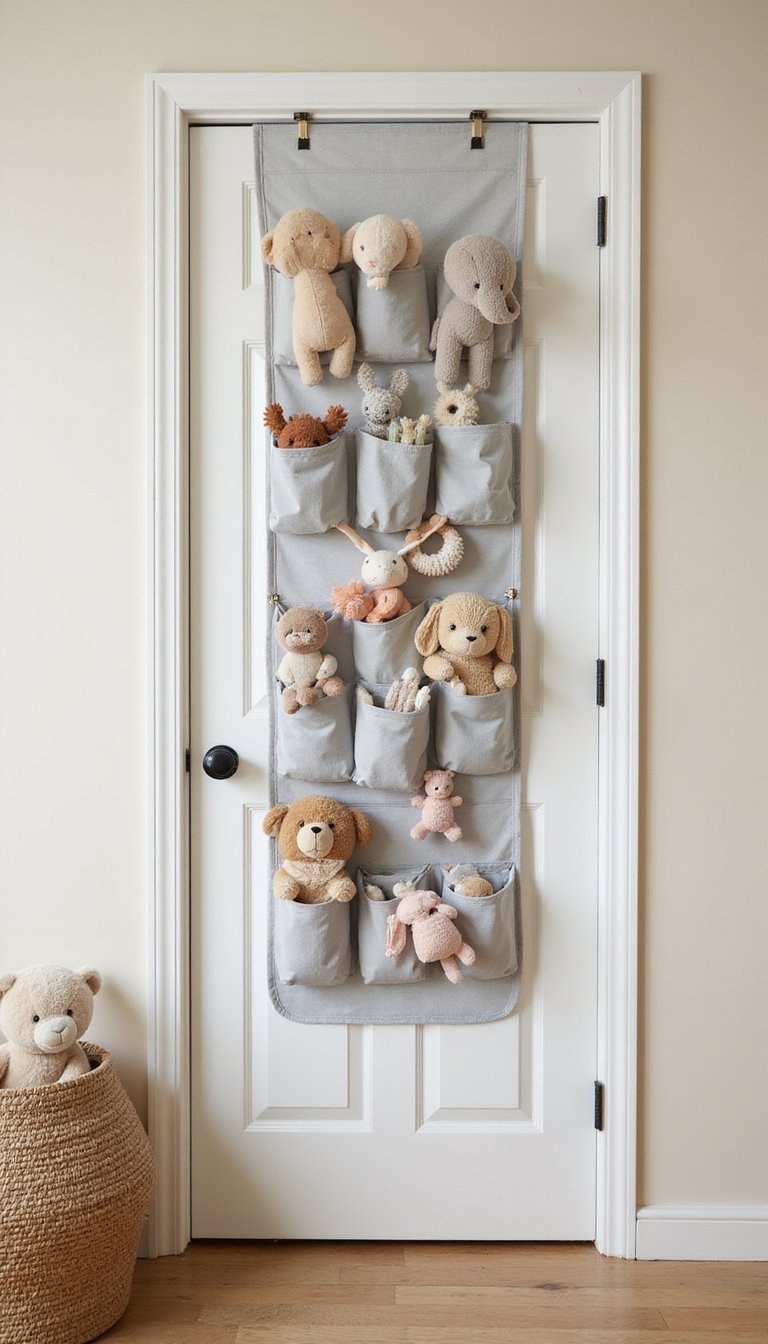
Door-mounted mesh pockets provide lightweight, breathable storage for soft toys, teethers, and bath supplies without taking shelf space. Choose a cream or pale gray organizer with reinforced pockets and pair it with a low woven basket for bulkier items. The airy mesh keeps toys visible while textiles like plush and silicone contrast with the structured pockets. This idea keeps floors clear and makes quick cleanup a breeze, all while blending into a neutral nursery palette so the closet remains tidy and inviting.
Styling Tips
- Reserve pockets by item type—bath, teethers, soft toys—for faster sorting.
- Use the lowest pockets for frequently used items for easy reach.
- Check mesh pockets regularly for wear and replace if needed.
Magnetic Labels And Chalkboard Tag System

Magnetic labels and small chalkboard tags on metal bins or shelving let you change labels quickly as sizes and seasons shift. Use matte black chalk tags, soft brass magnets, and light wood bins for a modern, tactile look. Pair with cotton and linen textiles in muted jewel tones or pastels for contrast. The ability to erase and rewrite keeps the closet adaptable and visually neat, and the mix of smooth metal, matte tags, and soft fabrics adds a layered, editorial feel to everyday organization.
Styling Tips
- Keep a small chalk pencil nearby for quick relabeling.
- Standardize tag placement for a consistent visual grid.
- Use magnets with subtle shapes to add a playful touch.
Linen And Muslin Folded Stacks On Shelves

Neatly folded stacks of linen and muslin created on open shelves bring softness and order to a nursery closet. Choose breathable linens, cotton muslin swaddles, and lightweight knit blankets in a calming palette of seafoam, blush, and cream. Keep stacks shallow to avoid toppling and tuck small folded labels into the front for quick grabs. The visible layers of fabric create a tactile display that feels lived-in yet orderly, and the natural fibers make folding and storing gentle on delicate baby skin.
Styling Tips
- Fold items uniformly for a neat, magazine-style look.
- Keep heavier items on lower shelves for stability.
- Add a small sprig of dried flowers on top for visual charm.
Seasonal Texture Swap For Cozy Winters

Swap airy cottons for chunky knits and fleece as the weather cools to keep the closet feeling fresh and snug. Store off-season muslin and summer rompers in labeled sealed bins and bring forward ribbed sweaters, wool hats, and fleece-lined sleepers in warm tones like mustard, deep teal, and cream. Mix textures—soft fleece, chunky wool, and brushed cotton—to create a tactile wardrobe that communicates warmth. This rotation approach keeps the nursery closet seasonal and cozy while preserving delicate fabrics during warmer months.
Styling Tips
- Swap textures by grouping similar materials together for easy finds.
- Store lightweight items in breathable bags to prevent moisture.
- Reserve a shelf for hat and mitten pairs in winter.