Key Takeaways
- Civil wars primarily involve internal conflict within a single country, often between organized factions vying for political or territorial control.
- Revolutions are transformative movements aimed at fundamentally changing the structure of government or society, frequently overthrowing the existing regime.
- While civil wars can result in political fragmentation, revolutions usually pursue systemic change and ideological shifts across the entire nation.
- Civil wars tend to be more focused on territorial or ethnic divisions, whereas revolutions emphasize ideological or social upheaval.
- Both phenomena can overlap but differ significantly in objectives, scale, and long-term impacts on geopolitical boundaries.
What is Civil War?
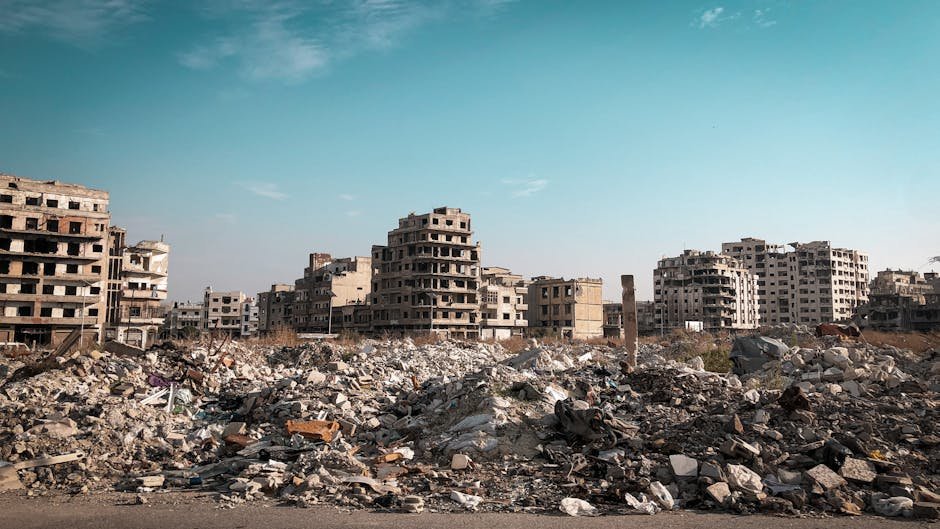
A civil war is an armed conflict between organized groups within the same country, often involving factions competing for political power or control over territory. It usually arises from deep-seated divisions such as ethnicity, ideology, or regional interests.
Internal Conflict and Fragmentation
Civil wars fragment the unity of a state by pitting factions against each other, sometimes resulting in the temporary or permanent division of the country. For example, the Syrian Civil War has led to various regions being controlled by different groups, challenging the central government’s authority.
These conflicts often exacerbate existing social, ethnic, or religious tensions, turning political disagreements into violent confrontations. The U.S. Civil War illustrated how deeply entrenched issues like slavery and state sovereignty can escalate into full-scale war.
As a result, civil wars can destabilize national institutions and disrupt governance structures, leading to prolonged chaos. This instability often creates power vacuums that complicate peace efforts and reconstruction.
Causes Rooted in Division
Civil wars commonly stem from unresolved grievances related to inequality, discrimination, or regional autonomy demands. For instance, the Nigerian Civil War was largely driven by ethnic and economic disparities among different groups.
These conflicts can also arise when marginalized groups seek independence or greater self-rule, challenging the central authority. The breakup of Yugoslavia during the 1990s involved multiple civil wars fueled by ethnic nationalism and demands for sovereignty.
Economic hardship and competition over resources frequently intensify these disputes, making compromise difficult. Such conditions often prolong conflicts and increase the human toll.
Duration and Intensity
Civil wars vary widely in length, with some lasting only months while others persist for years or decades. The prolonged conflict in Afghanistan has elements of a civil war, involving various factions fighting for control since the late 20th century.
The intensity of violence can fluctuate, with periods of relative calm followed by escalations as factions gain strength or external support. This ebb and flow complicate peacemaking efforts and create cycles of retaliation.
International involvement can also prolong or intensify civil wars by providing weapons, funding, or political backing to one side. The Yemeni Civil War has been exacerbated by foreign intervention, turning it into a proxy conflict.
What is Revolution?
A revolution is a fundamental and rapid change in political power or organizational structures, often driven by popular movements seeking to overthrow an existing government or social order. It typically aims to replace the status quo with a new ideological or institutional framework.
Goals of Systemic Change
Revolutions pursue deep transformation rather than merely shifting power between factions within the same system. The French Revolution exemplified this by dismantling the monarchy and aristocracy to establish a republic based on liberty and equality.
This upheaval often involves the rewriting of constitutions, redistribution of property, or radical reforms in governance and social hierarchies. Such changes aim to address perceived injustices embedded in the old regime.
Revolutions can inspire widespread participation, mobilizing diverse social classes united by the desire for change. The Russian Revolution mobilized workers, peasants, and soldiers under the banner of socialism and proletarian rule.
Popular Mobilization and Ideology
Unlike many civil wars, revolutions frequently rely on mass movements and ideological motivation to legitimize their cause. The Iranian Revolution was deeply rooted in religious ideology combined with opposition to Western-backed authoritarianism.
These movements often use slogans, propaganda, and symbols to galvanize support and challenge the legitimacy of existing authorities. The American Revolution, for example, emphasized liberty and self-governance to rally colonists against British rule.
This collective engagement fosters a sense of shared identity and purpose, which can sustain momentum even through setbacks. However, it can also lead to internal divisions as different factions compete to define the new order.
Impact on Political Structures
Revolutions typically result in the creation of entirely new political institutions or regimes that replace previous ones. The Chinese Revolution led to the establishment of the People’s Republic of China, fundamentally altering the country’s governance and ideology.
These new structures often seek to institutionalize the revolution’s ideals through constitutional reforms, nationalization, or social engineering. The Cuban Revolution introduced communist rule and significant economic restructuring.
The aftermath of revolutions can also involve purges, repression, or counterrevolutionary efforts as competing visions struggle for dominance. This dynamic makes revolutionary transitions complex and often unstable.
Comparison Table
The following table highlights key distinctions between civil wars and revolutions based on several critical dimensions.
| Parameter of Comparison | Civil War | Revolution |
|---|---|---|
| Primary Objective | Control over political power or territory within the same state | Complete overhaul of political or social systems |
| Participants | Armed factions or groups from within the same country | Popular masses and revolutionary leaders aiming for systemic change |
| Scope of Change | Often limited to shifting control between groups without changing fundamental institutions | Radical transformation of government, laws, and social order |
| Duration | May last several years or decades with intermittent conflict | Usually rapid and intense, though outcomes may take longer to stabilize |
| Role of Ideology | May be driven by ethnic, regional, or political disputes without broad ideological agenda | Strong ideological foundation, often tied to political philosophy or social justice |
| Impact on Borders | Potential for secession or fragmentation of national territory | Generally maintains territorial integrity while changing governance |
| International Involvement | External actors often support factions as proxies | Foreign influence may be ideological but less focused on proxy warfare |
| Post-Conflict Stability | Frequently results in prolonged instability or failed states | Varies widely but can lead to new stable regimes or ongoing turmoil |
| Examples | U.S. Civil War, Syrian Civil War, Nigerian Civil War | French Revolution, Russian Revolution, Iranian Revolution |
Key Differences
- Nature of Conflict — Civil wars are battles between factions within the same country, while revolutions seek to completely transform the existing regime.
- Participant Base — Civil wars are often fought by armed groups or militias, whereas revolutions engage broad segments of the population in mass movements.
- Change Scope — Civil wars may not alter political structures fundamentally, but revolutions aim for systemic and institutional overhaul.
- Territorial Consequences — Civil wars can lead to splintering or secession, whereas revolutions usually preserve the territorial boundaries of the state.
- Role of Ideology — Revolutions tend to have a stronger ideological drive than