Budget Friendly Living Room Makeovers are all about small changes that bring big personality. These ideas use paint, textiles, thrifted decor, and clever lighting to refresh a room without a big spend.
Budget Friendly Living Room Makeovers work well for family rooms, cozy reading nooks, and entryway-adjacent living spaces.
Each makeover idea leans on texture, layered lighting, and smart color choices so your living room feels current and comfy. Whether you want a bright daytime hangout, a moody movie-night vibe, or a breezy minimalist look, these tips match different moods and rooms while staying wallet-friendly.
Fresh Accent Wall With Affordable Paint

Painting a single wall transforms a room quickly and cheaply. Choose a warm terracotta, moody navy, or soft sage to create a focal point that complements neutral sofas and wooden floors. Materials are simple: eggshell or matte paint, clean edges, and painter’s tape. Texture comes from layering art or a floating shelf against the painted backdrop. This approach suits living rooms, entryways, and even small bedrooms where a bold color anchors seating and adds instant character without buying new furniture.
Styling Tips
- Test paint samples on the wall to watch shifts in daylight.
- Pair the accent wall with woven throws and a jute rug.
- Mount a slim shelf to display plants and ceramics.
Swap Textiles: Throw Pillows And Cozy Throws
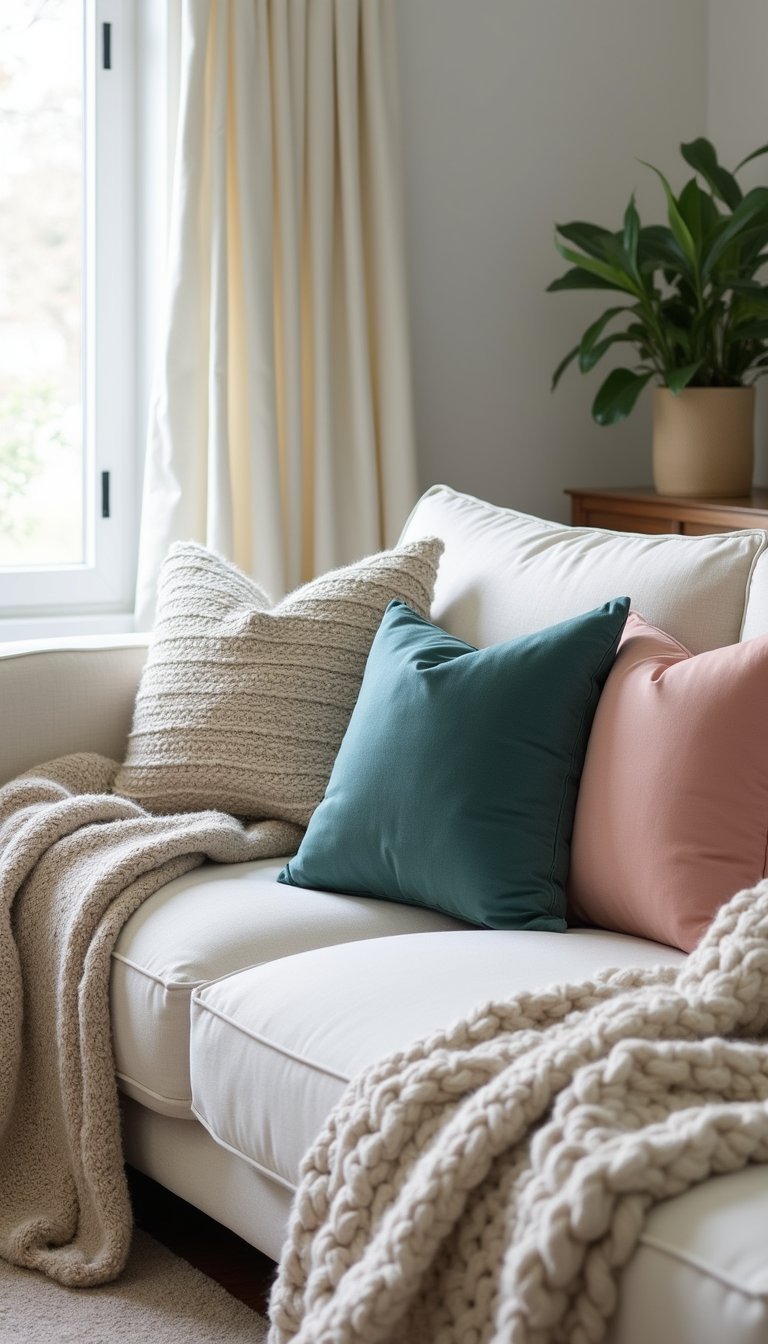
Updating pillows and throws refreshes a sofa without replacing it. Mix boucle cushions, linen covers, and knit throws for contrast in texture—think taupe, blush, ochre, or muted teal palettes. Materials are budget-friendly fabrics from discount shops or DIY sewn covers in heavyweight cotton. Textiles soften edges and add seasonal color: lightweight linen for summer, chunky knits for colder months. This makeover works best in living rooms and lounge corners, instantly shifting mood from minimal to cozy depending on the textures and tones you pick.
Styling Tips
- Use odd numbers of pillows for a relaxed, layered look.
- Choose one bold pattern and two solids to balance the sofa.
- Fold a throw over an arm for casual, lived-in style.
Layer Rugs For Texture And Warmth
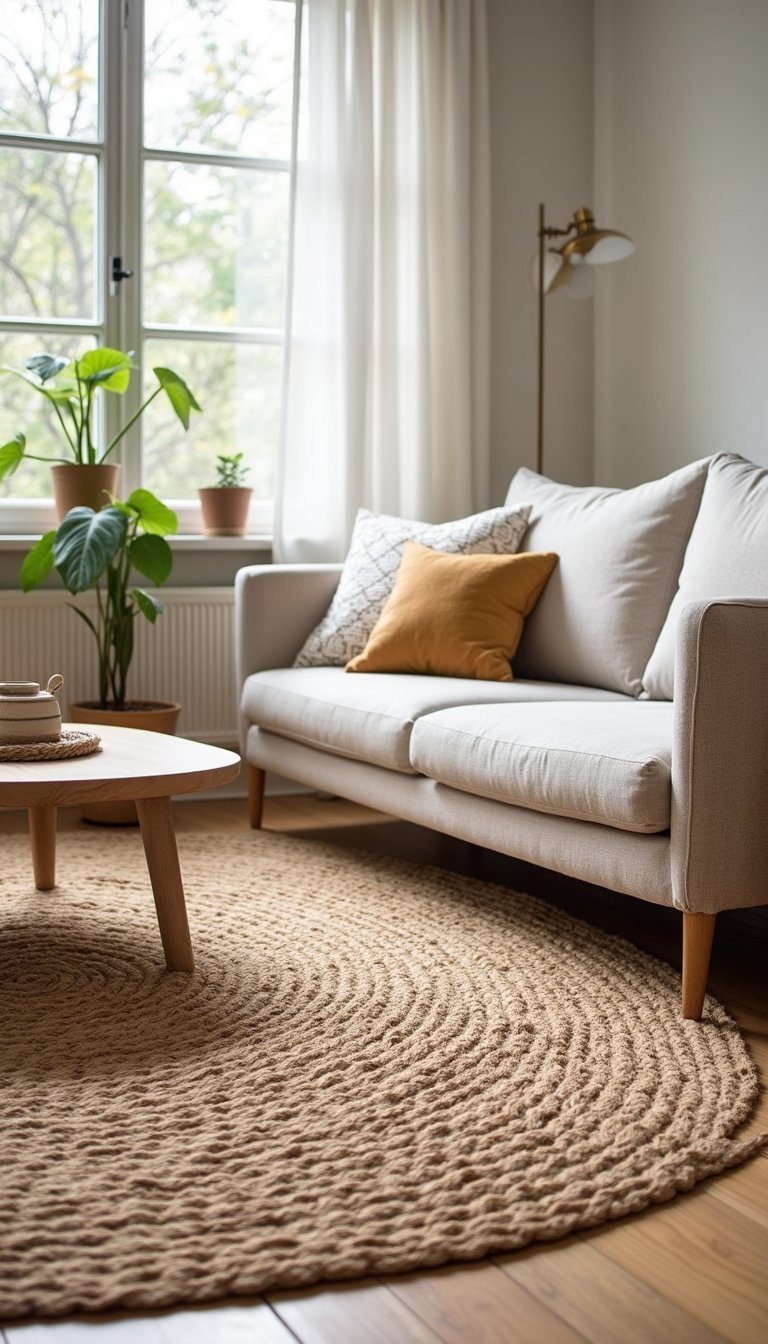
Layering rugs creates visual depth while defining seating areas on a budget. Start with a large neutral base rug—flatweave jute or sisal—then add a softer wool or patterned runner centered under the coffee table. This combo mixes natural fibers with plush texture, using a palette of cream, caramel, and muted blues for balance. Rug layering works well in open-plan living rooms and family areas to anchor furniture and add warmth underfoot without replacing full-room carpeting. It’s an easy way to introduce pattern and coziness.
Styling Tips
- Ensure the top rug is slightly smaller to reveal border of the base rug.
- Secure corners with non-slip pads to prevent shifting.
- Match rug tones to throw pillows or curtains for cohesion.
Thrifted Gallery Wall With Mismatched Frames

Curating a gallery wall from thrift finds keeps costs low and adds personal charm. Hunt for mismatched frames in wood and metal; combine vintage illustrations, black-and-white photos, and budget prints for visual variety. The palette can be monochrome with warm wood tones, or softened with a few pastel prints for contrast. Textures from distressed frames and matte paper add depth. This idea suits living rooms and entryways, transforming blank walls into conversation spots while letting small, inexpensive pieces read as a collected, stylish display.
Styling Tips
- Lay frames on the floor to arrange before hanging for easy adjustments.
- Use a consistent mat color to unify different frames.
- Anchor the layout around one larger central piece for balance.
Peel-And-Stick Wallpaper Accent On A Budget
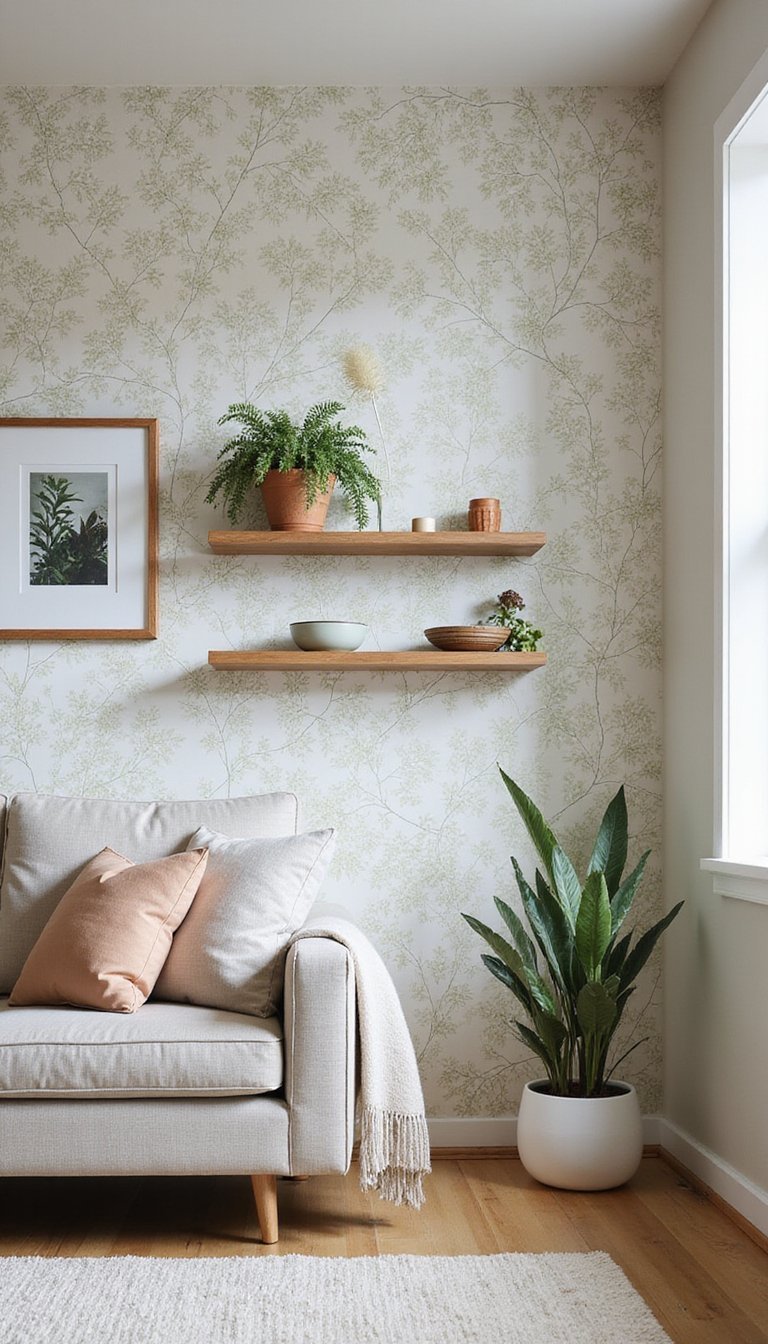
Peel-and-stick wallpaper gives wallpaper drama without commitment or pro installers. Choose a bold geometric, botanical, or textured grasscloth look to define an alcove or behind shelving. Materials are adhesive vinyl or fabric-backed papers that remove cleanly later. Combine the pattern with simple furnishings in cream, walnut, and brass for a polished feel. This tactic brightens small living rooms, corners, or rental-friendly spaces, offering a fresh backdrop that elevates shelving vignettes and artwork without a long-term commitment.
Styling Tips
- Prep the wall by cleaning and smoothing surface before applying.
- Match trim or paint color to a hue in the pattern for cohesion.
- Use wallpaper on a single wall to avoid overwhelming a small room.
DIY Floating Shelves From Reclaimed Wood

Floating shelves add storage and display space while being a weekend woodworking project. Use reclaimed pine or pallet wood for texture and character, sanded and sealed for durability. Pair with slim metal brackets hidden for a floating look. Shelves work in living rooms above sofas or consoles, holding books, plants, and small art. Color palettes that complement this look include warm wood tones, soft greys, and olives. The layered textures of wood and ceramics create a cozy, collected vibe without a heavy price tag.
Styling Tips
- Mix books and decorative objects to avoid visual clutter.
- Stack small frames and lean larger art against the wall.
- Add trailing plants to soften straight lines.
Reupholster A Chair With Affordable Fabric

Reupholstering a single accent chair refreshes a seating area affordably. Choose durable cotton-linen blends, canvas, or upholstery-grade polyester in solid colors or subtle patterns. Add foam replacement if needed and consider simple welt trim for a neat edge. Materials lend texture—woven fabric, leather-look vinyl, or boucle—paired with a palette of cream, navy, or rust for contrast. This project suits living rooms and reading nooks where a standout chair can define a spot and bring new life to an heirloom or thrifted find.
Styling Tips
- Opt for a neutral fabric if you plan to change room colors later.
- Add a small lumbar pillow in a contrasting tone for pop.
- Consider removable covers for easy washing and future updates.
Swap Lamps And Bulbs For Softer Light

Lighting changes affect mood more than most decor purchases. Replace harsh overhead light with layered lamps: table lamps, a floor lamp, and wall sconces if possible. Use warm LED bulbs and add dimmers for adjustable ambiance. Materials like matte ceramic bases, woven shades, and brass accents fit many styles; aim for soft white or amber-glow bulbs. This makeover suits living rooms used for reading, hosting, or movie nights—layered lighting makes the space feel curated, cozy, and more expensive than the spend suggests.
Styling Tips
- Place a lamp on each side of the sofa to create balance.
- Choose bulbs with warm color temperatures for cozy light.
- Use a dimmer or smart bulbs for flexible brightness levels.
Green Corners Add Houseplants For Freshness

Bringing plants into a living room creates color and life without a large budget. Mix heights with a fiddle leaf fig, snake plant, and smaller pothos or philodendron in woven baskets or simple ceramic pots. Textures from glossy leaves, rattan planters, and clay pots complement neutral sofas and wooden tables. A green corner suits sunny windows or a bright entryway-adjacent living space, offering calming greenery that softens lines and boosts the room’s welcoming vibe while doubling as an affordable decor upgrade.
Styling Tips
- Group plants in odd numbers to create a natural vignette.
- Use matching pots or baskets for a cohesive look.
- Rotate plants periodically for even light exposure and growth.
Declutter And Rearrange For Instant Calm
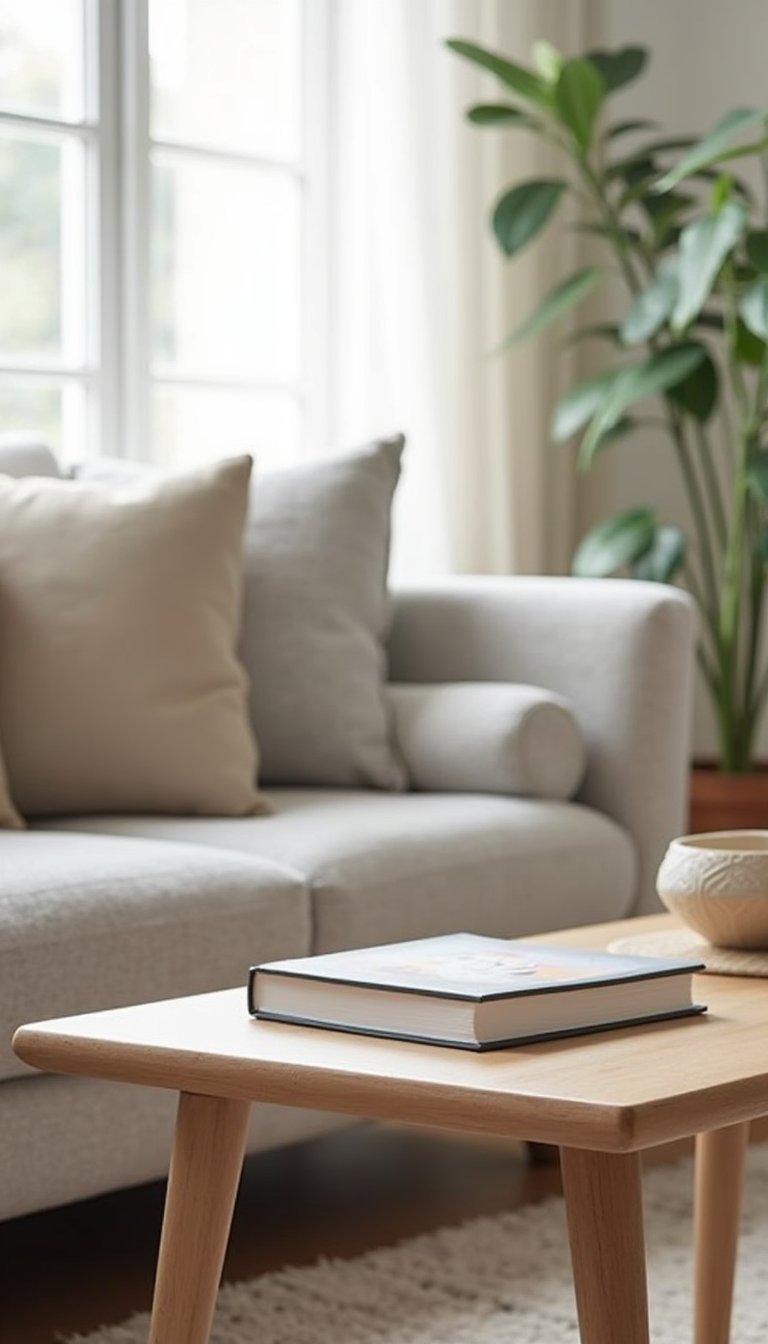
Sometimes a makeover is simply editing and rearranging what you already own. Remove excess accessories, group items into curated vignettes, and shift furniture to improve traffic flow. Focus on surfaces: clear the coffee table, stack books, and showcase one or two ceramics. Materials that read clean include glass, oak, and linen in a muted palette of creams, soft greys, and warm wood tones. This tactic suits small living rooms and multipurpose spaces where improving layout and reducing clutter immediately improves comfort and function.
Styling Tips
- Apply the one-in-one-out rule when bringing new items into the room.
- Create a black-or-white tray to corral remotes and small items.
- Place furniture to encourage conversation and clear walkways.
Slipcovers To Refresh Your Sofa Instantly
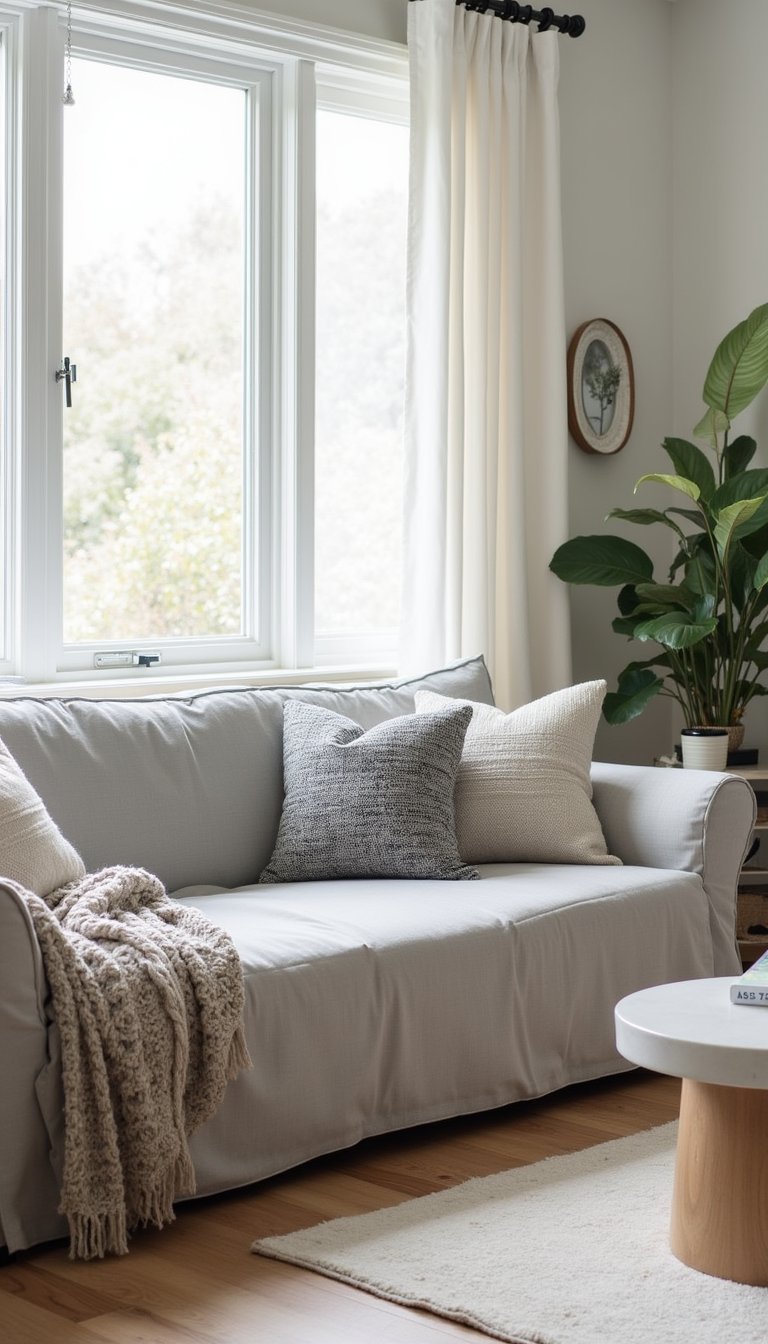
Slipcovers are a renter-friendly way to change sofa color and texture without buying new furniture. Choose tailored linen blends or stretchy cotton blends for a neat fit. Neutral slipcovers in cream, soft grey, or warm beige pair well with patterned pillows and wooden accents. Textures from the cover and layered throws make the sofa feel fresh and seasonal. This approach suits living rooms and family rooms that need an update quickly and affordably, while giving the option to switch fabrics as trends or needs change.
Styling Tips
- Measure carefully for a snug fit that stays in place.
- Add contrasting pillows to break up a single-tone cover.
- Use a slipcover with washable fabric for easy upkeep.
Large Statement Mirror To Open Space
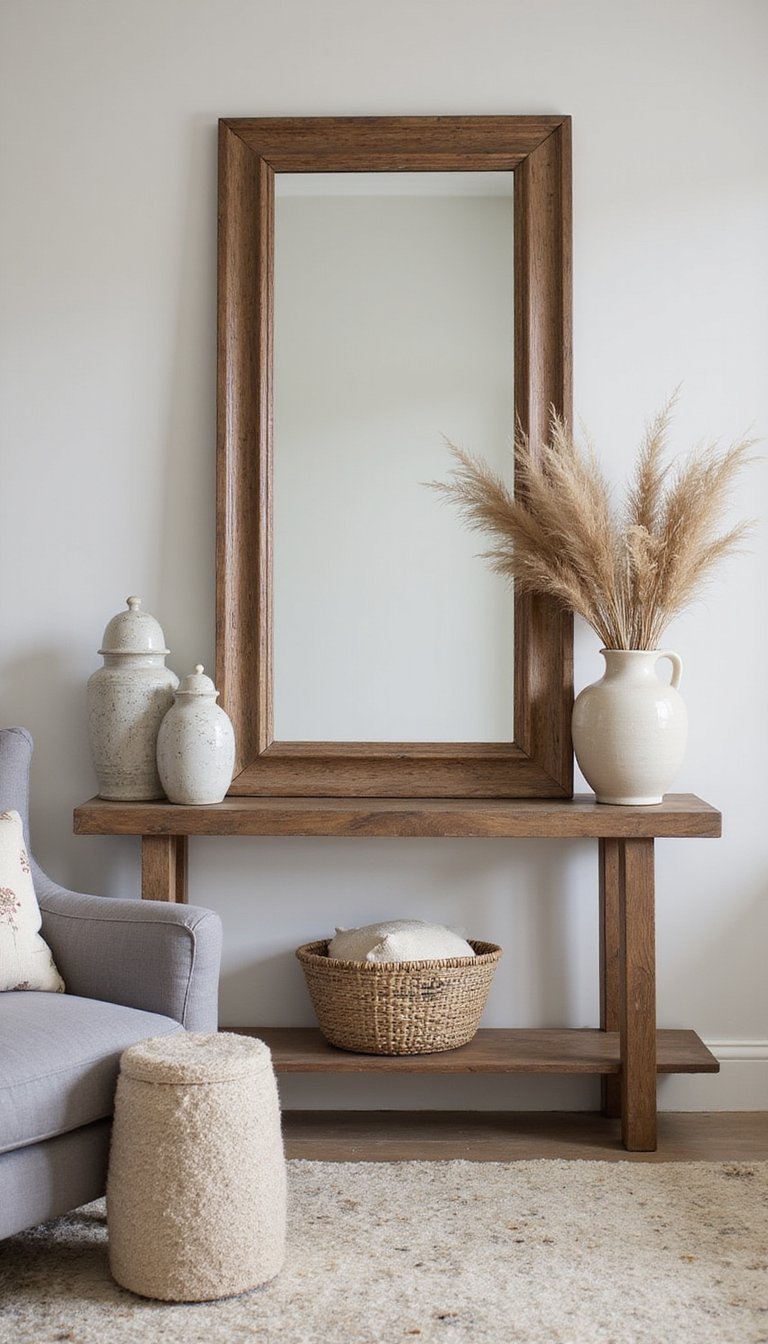
A large mirror reflects light and doubles visual space without architectural changes. Lean a framed mirror against a wall or hang it above a console to amplify daylight and view. Frame materials—distressed wood, black metal, or gilt—set the mood; pair with a neutral palette and textured accessories for balance. Mirrors work well in living rooms, entryways, or behind seating to make the area feel brighter and airier. This simple addition brings elegance and function on a modest budget.
Styling Tips
- Angle a leaning mirror slightly to catch more light or view.
- Coordinate the mirror frame with other metal accents in the room.
- Place a small vase or stack of books in front to avoid empty reflections.
Budget Curtains For Height And Drama

Installing floor-to-ceiling curtains instantly adds drama and makes ceilings appear taller. Choose lightweight linens for an airy feel or heavier velvet for a luxurious look on a budget. Neutral colors like off-white, sand, or charcoal work with many palettes; subtle stripes or natural textures add interest. Hang the rod close to the ceiling and let the fabric puddle slightly for a designer touch. This technique suits living rooms and dining-adjacent areas, elevating the space and framing windows without a major investment.
Styling Tips
- Mount curtain rods higher than the window frame to lengthen sightlines.
- Opt for unlined linen in bright rooms and lined fabric in sunnier spots.
- Use simple tiebacks to reveal architectural details during the day.
Create A Cozy Reading Nook With Budget Finds

Turn an unused corner into a dedicated reading nook with a thrifted armchair, a small side table, and layered lighting. Add a soft throw, a textured cushion, and a standing lamp for evening reading. Materials like boucle, wool, and rattan bring tactile interest while a palette of warm neutrals and a pop of rust or teal adds personality. This nook fits living rooms, alcoves, or wide window seats, creating a small retreat that feels curated and restful without a big budget.
Styling Tips
- Place a small basket for extra blankets or books beside the chair.
- Choose a compact lamp with a warm bulb for cozy light.
- Anchor the space with a small rug to define the area.
Repurpose Vintage Trunks As Stylish Coffee Tables
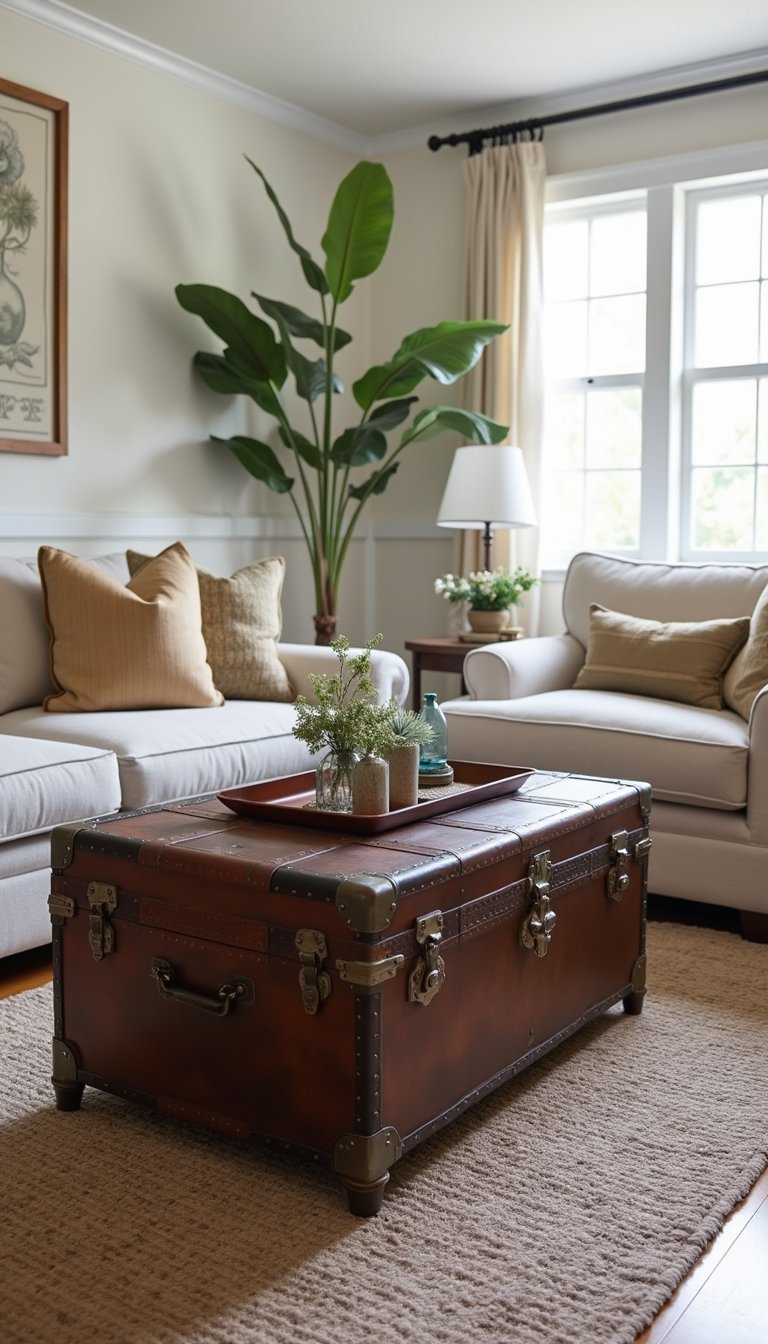
Vintage trunks act as unique coffee tables offering storage and style. Look for worn leather, metal hardware, or painted chests at flea markets to introduce patina and character. Pair a trunk with a soft rug and neutral seating; top with a tray, a stack of books, and a small plant for balance. This approach blends texture—leather, metal, and fabric—and suits living rooms in need of hidden storage for throws and games. A trunk becomes a focal point that feels curated without a large spend.
Styling Tips
- Add a decorative tray to create a flat surface for drinks and decor.
- Balance the trunk with softer textiles like pillows and rugs.
- Choose a trunk height that aligns well with your sofa seat height.
Accent With Colorful Baskets And Storage Bins

Baskets and bins add practical storage and decorative flair. Mix woven seagrass, cotton rope, and painted metal bins in a coordinated palette—soft terracotta, navy, and cream—to hide clutter and display texture. Use them under console tables, beside sofas, or stacked near a media center. Materials bring natural warmth and tactile contrast against smooth surfaces. This strategy suits family living rooms and play spaces, keeping essentials tucked away while contributing pattern and color to the overall scheme on a small budget.
Styling Tips
- Label or color-code bins for functional organization.
- Place taller baskets near seating for easy blanket storage.
- Use baskets of different sizes to create an interesting stack.
Wallpapered Cabinet Backdrop For Subtle Statement
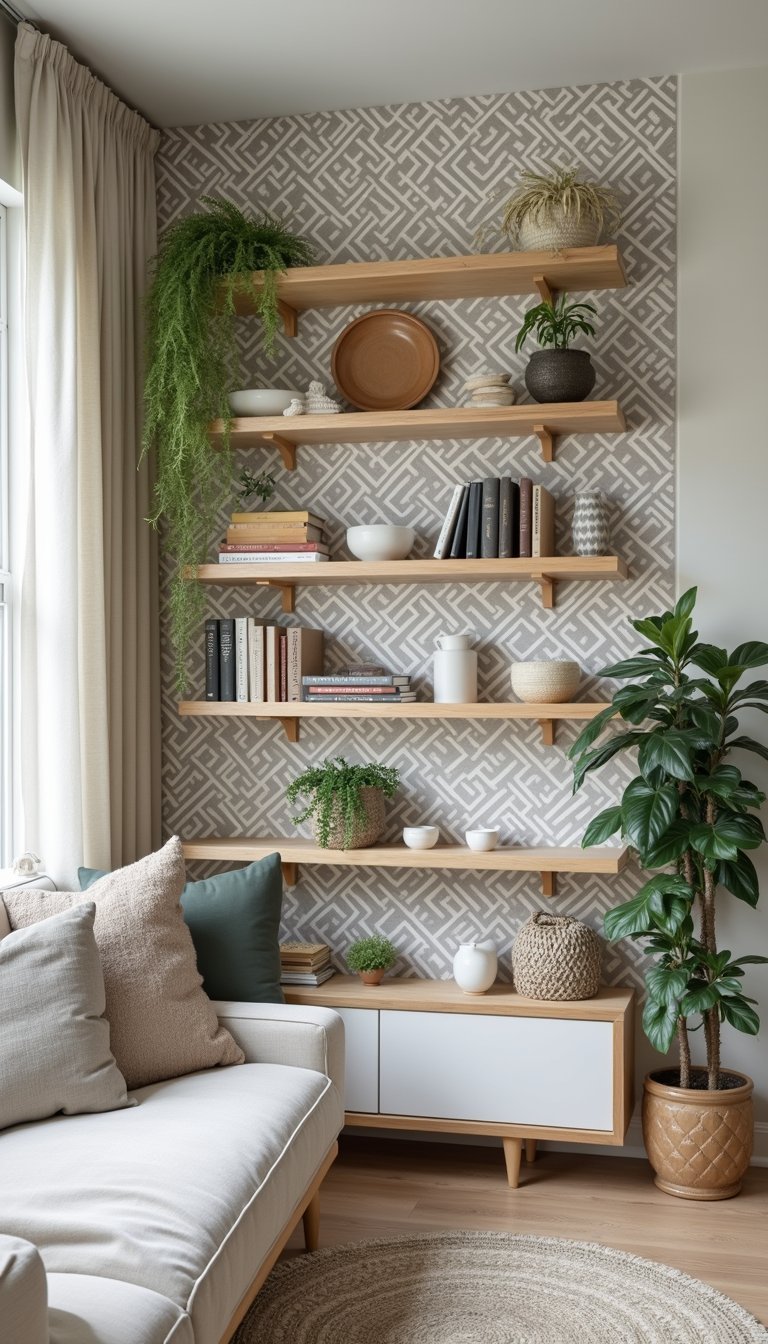
Line the back of open cabinets or a bookshelf with patterned peel-and-stick paper for a polished, low-cost update. Choose small-scale geometrics, soft florals, or textured neutrals to create depth, letting the backed shelves pop against simple ceramics and books. Materials like paper or vinyl give a refined look when paired with oak or painted cabinetry. This trick suits living rooms with shelving or media units, offering an easy way to add color and pattern without overwhelming the space or spending on new furniture.
Styling Tips
- Choose a pattern scale that complements the shelf size.
- Paint the cabinet exterior a coordinating neutral for cohesion.
- Place a few standout objects in front to tie the palette together.
DIY Slipmatched Art Using Fabric Scraps
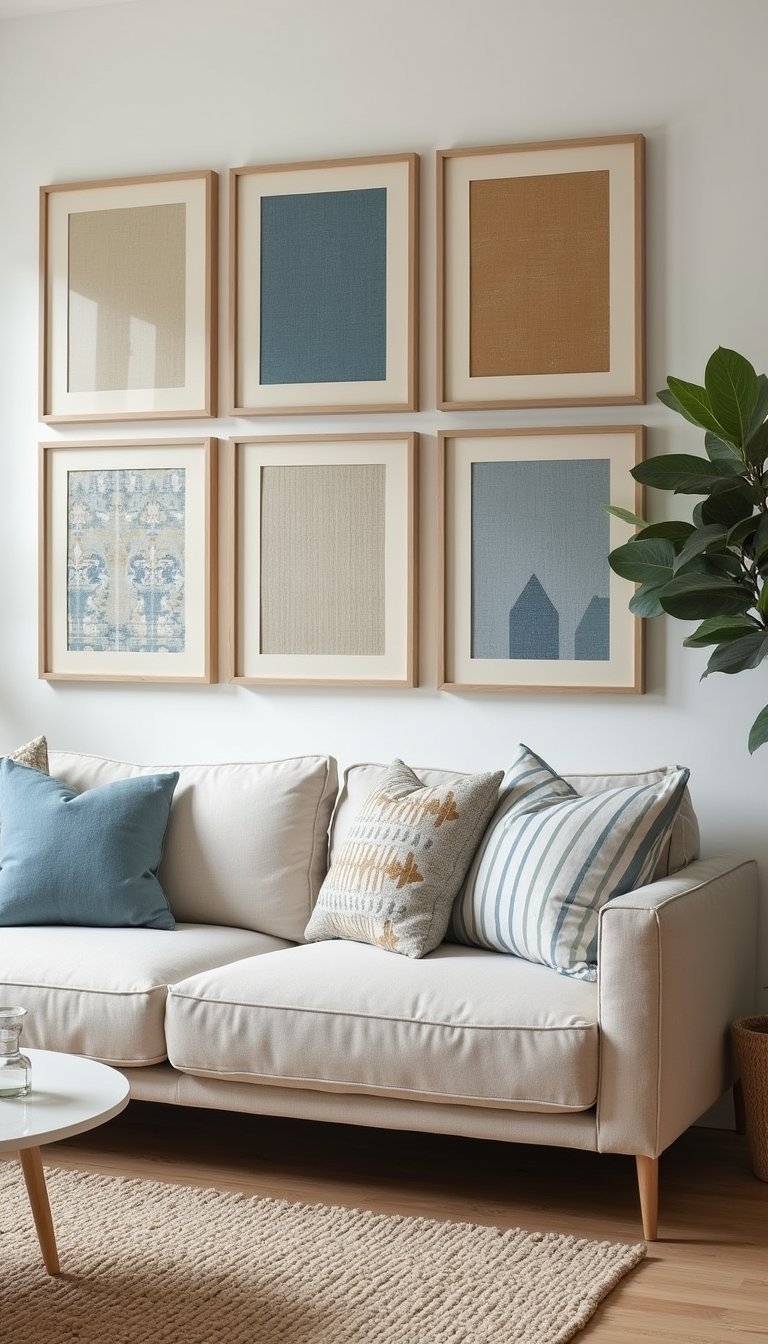
Create affordable wall art with framed fabric scraps in coordinating patterns and tones. Stretch fabric over simple frames or canvas panels for a tactile, gallery-style display. Choose linen, ikat, or woven patterns in a palette that complements your sofa—muted blues, warm ochres, and soft greys work well. Textured fabric brings warmth and a textile feel to the wall. This project suits living rooms and bedrooms where custom art can tie together pillows, rugs, and curtains without a large outlay.
Styling Tips
- Frame a set of three to five pieces for a neat grid display.
- Select fabrics with similar undertones to keep unity.
- Mix in one neutral piece to calm a bold pattern grouping.
Update Hardware On Cabinets And Side Tables
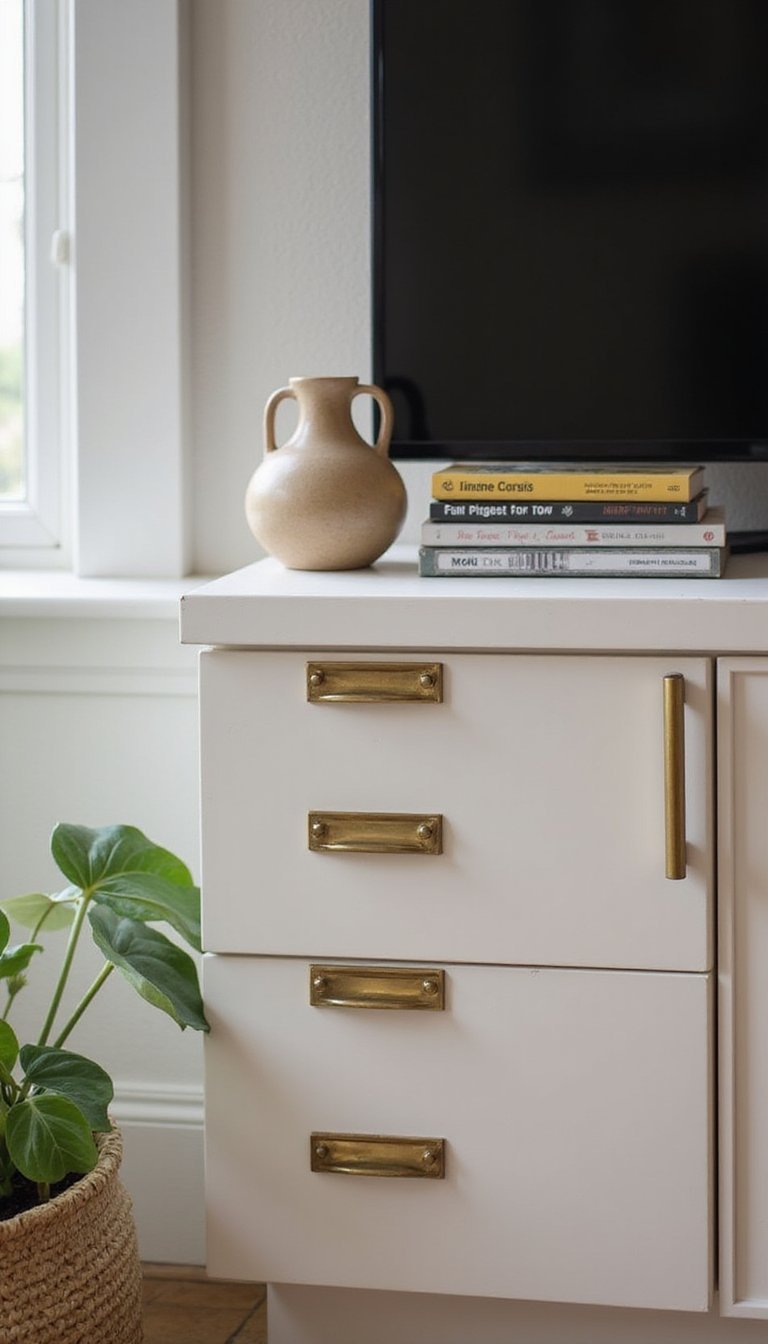
Swapping out dated knobs and pulls refreshes furniture instantly. Choose matte black, aged brass, or simple ceramic knobs to shift style without replacing pieces. This small upgrade affects side tables, media cabinets, and built-ins, adding a polished touch that ties the room together. Materials with tactile finishes complement wooden surfaces and textile textures—think brushed metal against linen pillows. This simple change suits living rooms and entryways and is a quick weekend update that makes older furniture feel current.
Styling Tips
- Measure existing holes before buying new hardware to avoid drilling.
- Pick a finish that repeats elsewhere in the room for cohesion.
- Clean or refinish the furniture surface for a like-new appearance.
Add A Runner Rug To Define Walkways

Runner rugs guide traffic and add color to narrow living spaces or hallways that connect to a living area. Choose low-pile wool or flatweave in elongated patterns—muted stripes or faded kilims—to add warmth and pattern while protecting floors. Runners pair well with wooden flooring and neutral sofas, bringing warmth underfoot and a layered look when combined with area rugs. This solution suits open-plan living rooms and entry paths, subtly directing movement while contributing texture and color on a modest budget.
Styling Tips
- Center the runner in the walkway with equal spacing on both sides.
- Place small furniture legs partly on the runner to anchor pieces.
- Opt for a washable pad underneath to prevent slipping and wear.
Soft Layered Lighting With Affordable Fixtures

Combine a modest overhead fixture with table and floor lamps for a balanced, inviting glow. Look for budget-friendly pendants, paper shades, and simple tripod floor lamps that spread light evenly. Use warm LED bulbs and add plug-in wall sconces where hardwiring isn’t an option. Materials like woven shades, matte metal, and frosted glass diffuse light softly. This lighting plan suits living rooms and bedrooms where flexible mood setting is key, creating a layered, magazine-style result without a costly electrical overhaul.
Styling Tips
- Place lamps at different heights to avoid flat lighting.
- Use bulbs with consistent color temperature for harmony.
- Consider plug-in sconces for rental-friendly wall lighting.